
To Find A Dance (AD, CC)
Season 2026 Episode 4 | 23m 19sVideo has Audio Description
The story of “Johnny Loves Johann,” dance set to Bach cello suites performed on violin.
The story of creating “Johnny Loves Johann,” which pairs Johnny Gandelsman’s folk-inspired violin interpretation of Bach’s cello suites with new choreography created and performed by John Heginbotham, Caili Quan, Jamar Roberts and Melissa Toogood. Access: Audio description, captions.
See all videos with Audio DescriptionADProblems playing video? | Closed Captioning Feedback
Problems playing video? | Closed Captioning Feedback
Past, Present, Future is a local public television program presented by WLIW PBS
Support for “Past, Present, Future” is provided by Elise Jaffe and Jeffrey Brown.
To Find A Dance (AD, CC)
Season 2026 Episode 4 | 23m 19sVideo has Audio Description
The story of creating “Johnny Loves Johann,” which pairs Johnny Gandelsman’s folk-inspired violin interpretation of Bach’s cello suites with new choreography created and performed by John Heginbotham, Caili Quan, Jamar Roberts and Melissa Toogood. Access: Audio description, captions.
See all videos with Audio DescriptionADProblems playing video? | Closed Captioning Feedback
Where to Watch Past, Present, Future
Past, Present, Future is available to stream on pbs.org and the PBS app.
Providing Support for PBS.org
Learn Moreabout PBS online sponsorship(upbeat music) (upbeat music) (complex, multi-layered music) (complex, multi-layered music continues) (no audio) (audience chattering) - [Announcer] Hello and welcome to the University of North Carolina School of the Arts.
Out of respect for the performers and fellow audience members, please turn off or silence all electronic devices.
Thank you.
(no audio) (footsteps falling) (slow, expressive strings music) (slow, expressive strings music continues) (slow, expressive strings music continues) (slow, expressive strings music continues) (slow, expressive strings music continues) (slow, expressive strings music continues) (slow, expressive strings music continues) - Anyone want to say anything about it?
Ideas, thoughts?
- There's some things that we were doing with the touching and the holding of hands.
I was just curious if, probably not, but I'm going to set that stuff, right?
- I think I would feel, I don't know, like not setting that, yeah.
- Yeah, I think imagining a world where, if the beginning kind of happens similarly, and we all end up gathering, he stops, and then we keep going, and then somehow pick up Johnny later.
- [Dancer] Or you just drop me when we need you for the next step.
- Correct.
- Yeah, yeah.
(dancers laughing) - In the first residency we got together, we didn't know much about anything.
(people chatting) (plucky strings music) - [Speaker] I've never seen that before.
- [Dancer] The two sets, do you want us to switch partners on?
- Should we make a plan?
- Oh, yeah.
- Okay.
- Okay.
- Plan for the day.
What should we do?
♪ Happy birthday to you - It's been a while since I've been on stage, so I was intimidated, even though Bach has been approached by many dance artists.
I mean, all six of the cello suites on violin in one evening, that's a lot of dance to make up.
- And five, and six, and seven, and eight.
We go one, two, three, four, and five, six, and a seven, eight, and a one, two, three, arm, four.
- [John] Having all these people in a room- - [Dancer] We go one.
- [John] Everybody has a point of view.
- And a five, six.
- They may be a leader.
- [Dancer] And seven, eight, and one, two.
- How we get from A to Z is- - One, two, three, four, five, six, seven, eight.
One, back two, that's it, yeah.
- How do I go?
Wait, hang on.
I'm gonna stick with my left.
What am I doing?
Three?
What happens after this?
- You go this way, this way.
- So if you go left, face me.
- Right.
- Salute and then like.
- Boom and then this.
- Ba ba ba ba ba ba ba ba.
- Back.
- One and a two, and a three, and a four, five, six, seven, eight.
(dancer laughing) - Yeah.
Shall we listen?
(plaintive strings music) - I like that.
- We got to put Johnny in here somewhere, you know what I mean?
- Should we put him in here to try it out.
- Yeah.
There.
- Yeah, I was going to be like, Johnny's going to be like, "I am claustrophobic."
- But I think it's gonna be nice.
- Yeah.
It's like real intimate.
- One, two, three, four.
(plaintive strings music) - Many pieces of music in classical music kind of come with, baggage is too strong of a word, but there is certain traditions how pieces are interpreted and how they're played, and the cello suites have that as well.
When performed on the cello, they have a sort of grandeur that makes that music feel like it's profound and sacred.
On the violin, because it's light, because it's nimble, the feeling of dance, the feeling of groove, the feeling of steps just started kind of coming up to the surface more and more.
At a certain point, I thought these are dances and I'm just standing here on my own.
(plaintive strings music continues) (plaintive strings music continues) (dancers laughing) (no audio) (lively strings music) Oh, okay.
(lively strings music continues) - [Speaker] Yeah.
- Back to one.
- One, a two, and three and four, five, six, dah, dah, dah, dah, dah, dah.
Dah, dah, dah, dah, dah, dah, dah, dah, dah, dah.
Ba-da-da-da-da-da ba-da-da.
(light, lively strings music) (light, lively strings music continues) - Yeah, yeah.
(light, lively strings music continues) - That's a contraction.
(footsteps falling) (light, lively strings music continues) - Huh?
- [Dancer] I was just wondering how much longer it is.
- Oh, it's, that was a quarter.
(dancer exclaiming) - Okay.
(dancer claps) (slow strings music) (slow strings music continues) - I feel like I want more of a weaving through line, to still keep it a surprise, but either bring it back, or just be very clear with the things that we do do, like with Jamar's drawing, but it doesn't end there.
- The very beginning I'm still like, I don't know, because it just feels so like, oh my god, it's that music.
But I didn't want to build up to something, that's why I just go right away.
That feels right to me.
- I think what is really strong, there is a juxtaposition between the music, that what we, or I will say me, that what I used to hear Bach very serious, in a concert hall, everybody's like tuned to that, to the playfulness, the first note.
♪ Bom bom I'm like, yes.
(lyrical strings music) (lyrical strings music continues) - Is there like a connection to child's sense of wonder and wanting to touch things, and just not being constricted by experience, or like you just do crazy things, like your dance is just like.
(wind whipping) (leaves rustling) There are a few moments in the work where there's physical contact between the dancers and myself, but it feels electric.
(emotional strings music) - [Caili] To listen to the back of a violinist play music, it's quite extraordinary.
It's like this thing that amplifies.
- I've been playing the violin for 42 years.
That's never happened before.
I feel like a whole part of me has been missing for 42 years.
- Does anyone want to go to Bad Moffitt tomorrow?
- Hit me up and came back.
- There's a moment where- - That first residency went better than we all expected.
Same with the second residency.
Now it's like, ugh, we have to finish it, that's hard.
Yeah.
It's hard.
- Can I just ask you?
- Yeah.
- Where are you in the process?
- We're almost done.
We're almost at C1 of "Bourrée," so we're finishing up my half, and then he already made Melissa's half.
- Amazing.
- Yeah.
- So I guess here's the bigger question.
It would be lovely to maybe run the entire suite three at the end of today.
- Yeah.
- But we need to review.
This is a question.
- Yes.
- So it sounds like you're within minutes.
- It's close.
Right?
- It's close.
- You hit one earlier than me.
Going to go.
- This is now the first time we've done a slink away.
I could slink away.
- A slink away.
- Come up and then you.
Oh.
- [Dancer] I think this is already into the- - Dee-dee dee-dee, dee-dee dee-dee.
Okay.
(reverberating strings music) (elegant strings music) - And it stops at 14:25.
Okay, not bad in length.
- There's really not that much time to think.
There's not time to like mull.
You just create, pull it together, trash what you don't like, keep what you do, and I think it frees you up.
(elegant strings music continues) - This way.
- Oh, you want me to turn that way?
- Yeah.
Let's just try it as a waltz, like traditional waltz for a second, exactly.
Sorry, you would go this way.
Am I right about this?
One, two, three, two, three, two, three, four.
- [Dancer] And I think we did the same leg again.
- I think we did.
Okay, I'd love to do a little lift with you.
- Okay.
- But I want it to be weird.
Yeah, something like that.
- Should I stay here?
- I don't know.
Yeah, maybe.
I somehow want to come out, I just want to face forward, but still be connected to you.
- Ah, okay.
Then I can just stay attached.
- Right, so if we're like this, I'm just gonna go.
Dah-dah-dah dah-dah-dah dah-dah-dah dah-dah-dah dah dah dah.
- Rat tat tat.
(shoes squeaking) That's all we got.
- Okay.
Score.
How much more do we need?
- I think the rest of- (laughs) - The rest of, the whole suite?
- I think so, that's how I was- - Dancing is tricky because as you get older, your artistry and your heart get bigger, right?
You understand who you are as a person more, but the physicality kind of naturally lessens with age.
- Let's just make contact there.
Yeah, ton-a-tah.
Yon-ton-a-tah.
That's the spirit.
Stay.
(laughs) What do I do?
Pull.
Uh-huh.
- This way?
- And now push me back.
(dancer grunting) And then I'll go here.
You want to do that?
- I don't know.
- Wow.
- I don't know.
I chose this, but I- - I'll tell you what I was thinking.
I was thinking like, you know how like the ball on the pinball machine goes, dee, dee, dee, dee, doo, doo, doo.
We all sort of instinctually know that, in order for inspiration to come into the room, we kinda have to get out of our own way.
The only thing that makes it hard is when you can't leave your demons outside of the studio.
But I think if you have a pretty good handle on keeping that outside, it's fine.
Grab my head and just like roll it.
(dancer laughing) Roll it.
(dancer laughing) (light-hearted strings music) - I feel like- - I feel like- - I feel like- - I feel like what if we all do a little bit in silence and then you play this whole thing yourself?
- One and two is a good place to stop for now.
- Longer is attractive.
- You're pushing your ideas.
- You can go further.
- Could be really fun to do that.
- I don't know if this really relates at all.
Is that okay?
- It would be nice in five.
- I need more.
- Everybody should learn how to dance.
- Prior to that feels too soon to me.
- Now we have a path.
- Focusing on three.
- It's a structure that could be useful.
- I'm not sure what's happening.
- That's pretty rare.
- He needs to be more scripted.
- I've been on the floor long enough.
- [John] Like a tight spot.
- When I'm dancing, I'm like on roller skates, or some kind of conveyor belt.
- I need to start figuring it out.
- Your ethos is throughout the whole process.
- I'm gonna cry or something.
(laughs) - I feel like- - I feel like- - I feel like- - I feel like we're organically starting to connect with each other and with other parts of the whole show.
- [Interviewer] Is there still time for that?
- There has to be.
There's got to be time.
(jovial strings music) (jovial strings music continues) - I have pain, (laughs) but my heart is so full.
(jovial strings music continues) (jovial strings music continues) - [John] Trust is a huge part of building anything, really.
Letting go of this thing of like I'm the boss, I'm the leader, I'm the person who's the last word, that also takes a lot of trust.
And that's why I think this group of people is really special, because that feeling is very strong.
(object banging) (motor whirring) (metal squeaking) (motor continues whirring) (subdued strings music) (people chatting) (expressive strings music) (expressive strings music continues) (expressive strings music continues) (shoes squeaking) (emphatic strings music) (music echoing distantly) (door opening) (people speaking faintly) (fast tempo strings music) (fast tempo strings music continues) - There was a dance maker, Daniel Nagrin, he would talk about finding dances rather than making them.
And I think that's what we're trying to do, is like find the dance.
So when you're watching rehearsal, you're watching us excavating and building at the same time to try and find what the dance is.
It's hard work that inspires you and gets you like, "Okay, I can keep doing all the hard stuff."
(moving strings music) - [Johnny] When I was growing up, coming from a very traditional Russian school of classical music training, it was all focused on being a soloist.
And that was the path until I discovered what I enjoy about playing the violin, because up until that point, I was kind of questioning why I'm doing it.
(intensifying strings music) But I realized that being a part of a community and in community seems more and more like the only way to go.
- Keep going?
- Yeah.
(joyous strings music) (joyous strings music continues) (joyous strings music continues) (joyous strings music continues) (joyous strings music continues) (joyous strings music continues) (joyous strings music continues) (joyous strings music continues) (joyous strings music continues) (joyous strings music continues) (joyous strings music continues) (joyous strings music continues)
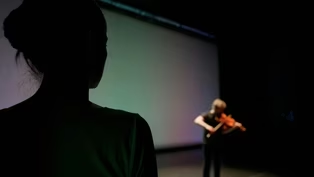
Video has Closed Captions
Preview: S2026 Ep4 | 30s | The story of “Johnny Loves Johann,” dance set to Bach cello suites performed on violin. (30s)
Providing Support for PBS.org
Learn Moreabout PBS online sponsorship

- Arts and Music

Innovative musicians from every genre perform live in the longest-running music series.

 New Episode
 New Episode
 New Episode
 New Episode


Support for PBS provided by:
Past, Present, Future is a local public television program presented by WLIW PBS
Support for “Past, Present, Future” is provided by Elise Jaffe and Jeffrey Brown.